

Publicado: Por Trucell3 min de lectura
Self-service check-in now live at Aspire Radiology Hornsby
Aspire Radiology at Westfield Hornsby goes live with Trucell self-service check-in: a kiosk that takes registration off the front desk and feeds Voyager RIS.
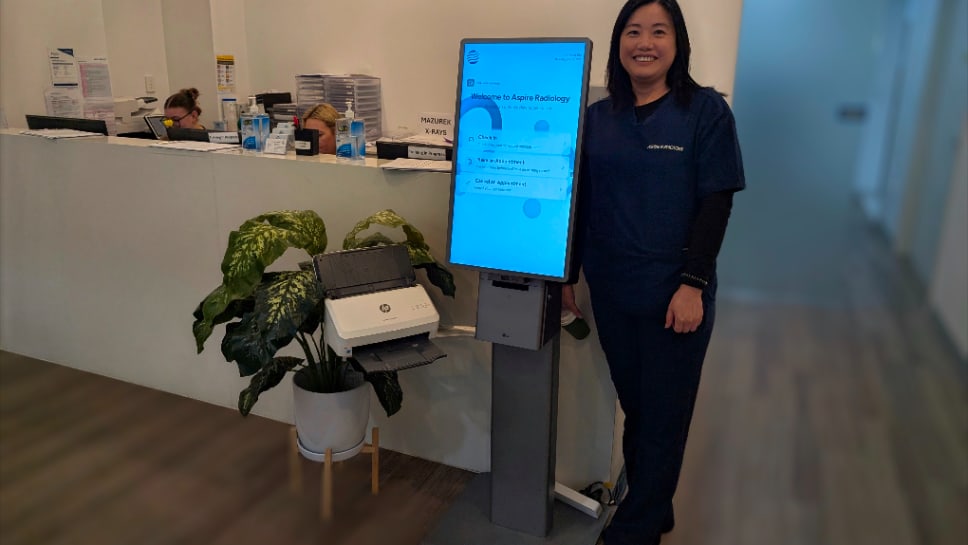
Aspire Radiology has gone live with Trucell self-service check-in at its Westfield Hornsby practice (Shop 3049, 236 Pacific Hwy, Hornsby NSW 2077). The first kiosk went into reception on 17 June 2026 and is now taking routine arrivals off the front desk.
At a glance: one self-service kiosk in reception, with an on-board document scanner, integrated to Voyager RIS (MiSoft), so check-in data lands where reporting and billing teams already work.
The pressure this takes off reception
Patients do not arrive evenly. They come in bursts, and a single front window can only move so fast before the waiting area bunches and the desk falls behind. Every minute spent rekeying the same demographic, referral, and Medicare details is a minute reception is not spending on the patients who actually need a person: complex referrals, language support, billing questions, anyone who is anxious or unwell.
When those details are entered late or under pressure, the errors do not stay at the desk. They flow into scheduling, into billing, and sometimes into the patient record, creating avoidable rework downstream.
What went live at Hornsby
A single floor-standing kiosk now sits in the Aspire reception at Westfield Hornsby. Patients identify themselves, confirm their appointment, and complete the routine steps of check-in on screen, with the on-board scanner capturing referral paperwork at the same time. Reception staff stay in the loop for anything that needs judgement, and the captured details write back into Voyager RIS so the rest of the practice sees the same information without re-entry.
The result on day one is simple: the predictable, repeatable part of arrival moves off the counter, and the desk gets room to breathe during the busy stretches.
Not just a screen in the lobby
A kiosk on its own does not fix a queue. The win is in the workflow around it: deciding which steps run on the kiosk and which stay with staff, agreeing how data writes back to Voyager, and rehearsing the exceptions before go live so reception keeps confidence under load. That is the difference between a device that idles and one that earns its place in the waiting room.
This deployment follows the same approach Trucell uses across imaging operations: scope the arrival experience and the integration first, then place the hardware. More on the product and how it fits your practice: Smart Kiosk. Broader imaging IT context sits under PACS and RIS.
What is next at Aspire
With the first kiosk live and tuned at Westfield Hornsby, the focus now is measuring the relief at the desk during peak clinics and the completeness of registration data reaching reporting and billing, before considering wider rollout.
If your practice wants the same relief at the front desk, book a kiosk fit call. We will map scope, integration, and a sensible go live for your site.